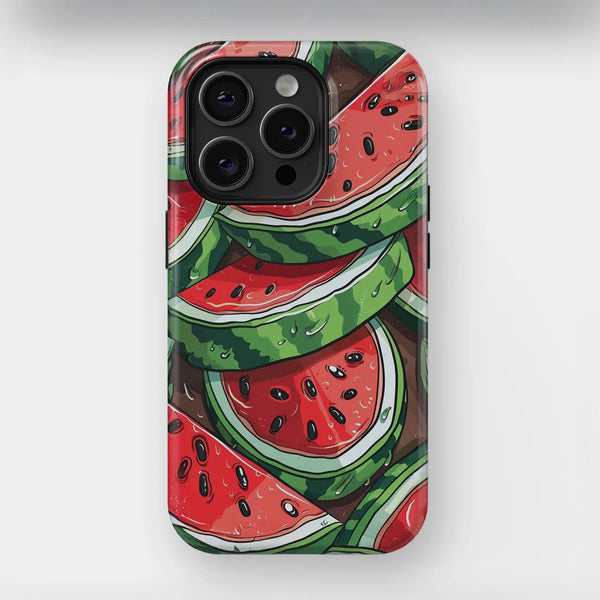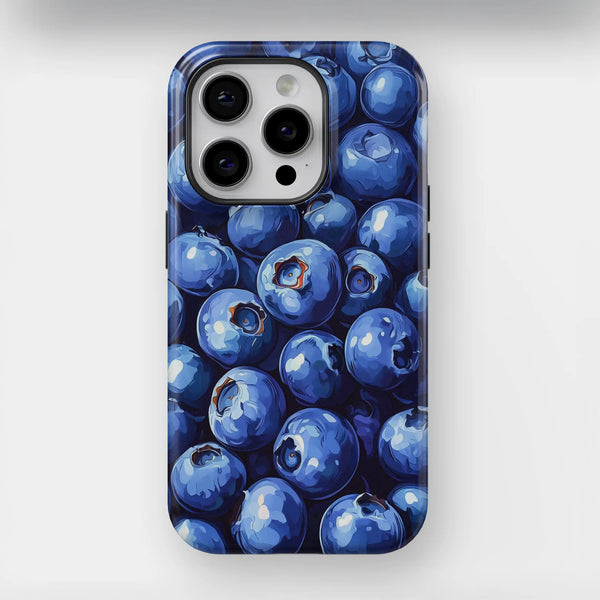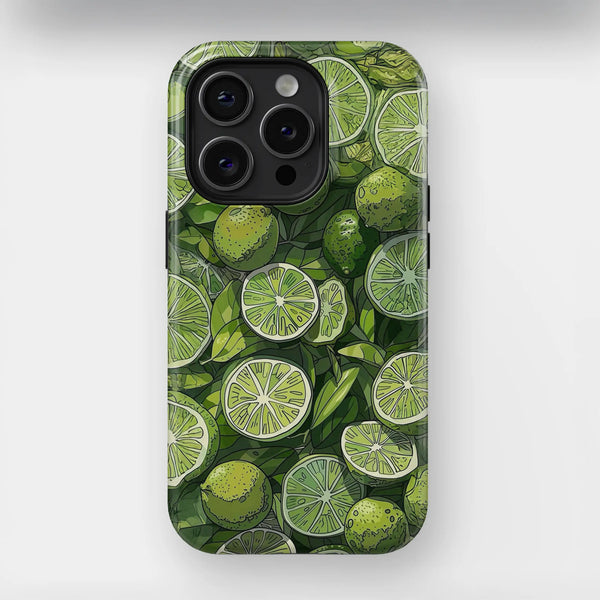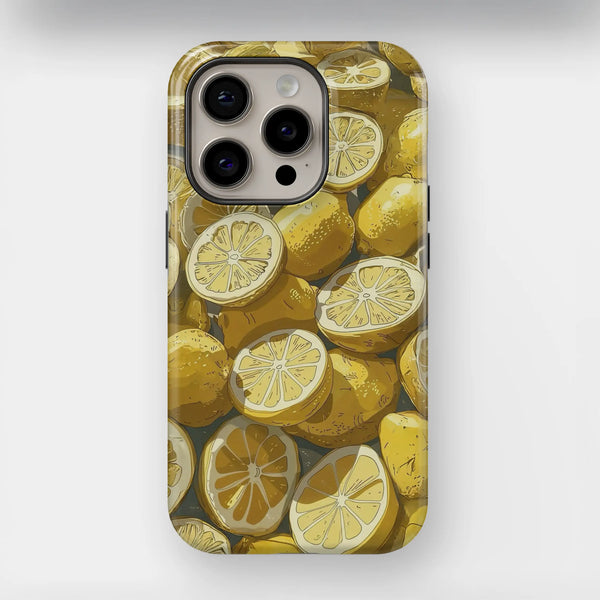



Most phone cases are designed in a spreadsheet. Pick a trending motif, license a graphic, print a hundred thousand units, discount whatever doesn't sell. We built Casey to do the opposite, and the difference is visible in how every case is made.
The short answer: a Casey case starts as original artwork made in Sweden, is printed in small runs in Sweden, and ships from here with DHL. The build is dual-layer: a rigid polycarbonate shell that spreads impact force, over a softer inner liner that absorbs it.
It starts as artwork, not a template
Every Casey design begins as original artwork made for Casey in Sweden. Never a stock graphic, never a licensed print, never lifted from a supplier catalogue. The BlueBerry's indigo skin texture, the static of No Signal TV, the pixel consoles of Retro Gaming: each one is finished as a piece of art before it ever touches a phone. That's why the tagline isn't a slogan. Art you can carry is the production process.
What is a dual-layer tough case?
Two kinds of protection doing two different jobs. The outer shell is rigid polycarbonate, the same family of material used in riot shields and aircraft glazing, which spreads the force of an impact across the whole surface. Inside sits a TPU liner: soft, flexible thermoplastic that absorbs the shock the shell distributes. Hard outside, forgiving inside.
| Layer | Material | Job |
|---|---|---|
| Outer shell | Rigid polycarbonate | Spreads impact force across the whole case |
| Inner liner | Flexible TPU | Absorbs the shock the shell distributes |
| Surface | Sealed finish | Protects the print from keys, coins and pockets |
| Magnets | Array built into the shell | Works with MagSafe chargers and accessories without removal |
| Edge | Raised lip around the screen | Keeps the glass off the table face-down |
Every case is precision-cut per iPhone model, so ports, buttons and the camera array align exactly, across iPhone 11 through iPhone 17 Pro Max including iPhone Air and the 16e.
Why print in small batches?
We print in small runs in Sweden instead of mass-producing overseas. Three reasons.
Waste. We never print thousands of units on a guess, so nothing ends up shredded in a discount bin.
Quality. Small runs mean each print gets checked, and colour stays deep and accurate.
Honesty. When a design sells out, it retires. A Casey case isn't one of a million, and the people who own one know it.
It also means your case ships from Sweden: DHL, 1 to 2 business days to dispatch, rather than from a container three oceans away.
The details you would not notice, until you would
The finish isn't cosmetic. It seals the print so the artwork survives pockets, keys and daily handling. The raised edge keeps the screen off the table. And there's a 30-day return window on every unused case.
See what people keep choosing in Best Sellers, or start with a statement like Money i$ The Motive or a cosmic one like Spacey Kitty.
The honest limitation
Small batches cost you choice. Our catalogue is around forty designs rather than four hundred, restocks aren't guaranteed, and when something retires it's gone. If you want a specific design in six months, buying it now is the only reliable way to get it.
Printing in small runs in Sweden also costs more per unit than mass production in Asia, and that shows up in the price. It's mid-range rather than cheap. We think the trade is worth it. You might not, and that's a fair conclusion to reach.
FAQ
What is a tough case?
A two-part protective case: a rigid polycarbonate outer shell over a shock-absorbing TPU inner liner. It protects better than single-layer cases while staying slim.
Do Casey cases work with MagSafe?
Yes. Every case has a magnet array built into the shell that works with MagSafe chargers and accessories, and charges wirelessly without removal.
Where are Casey cases made?
Designed and printed in small batches in Sweden, shipped worldwide with DHL.
What does small-batch printing actually mean?
Short production runs rather than bulk manufacturing. Each print is checked individually, nothing is produced on a sales forecast, and designs retire rather than being discounted when they sell out.
Will a sold-out design come back?
Usually not. Small runs retire permanently once they sell through, which is the trade-off for not printing on a guess.